- You have no items in your shopping cart
- Continue Shopping


Today I am going to share with you what I’ve learned thus far on my journey to self-discovery and positive growth.
Along the way, through many of life’s ups and downs, with the help of many awesome teachers and mentors, I now most often live in a state of happiness and contentment. I still have lots to learn, but I wanted to share with you what I’ve found most helpful thus far.
I truly believe that all people have the capacity to choose their mental attitude. Therefore, if happiness is what you desire, then you must choose it.
Here are seven keys to help you do just that.
1. Self-Worth
Without self-worth, happiness will always feel just beyond your reach.
Not because you haven’t achieved enough or acquired enough or become enough — but because you’re seeking external validation for something that can only come from within.
Self-worth isn’t binary. You don’t either have it or you don’t. It exists on a spectrum, and where you fall on that spectrum can shift depending on circumstances, challenges, and how well you’re taking care of your inner life.
The balance we’re seeking: Recognizing your inherent value without inflating your importance above others.
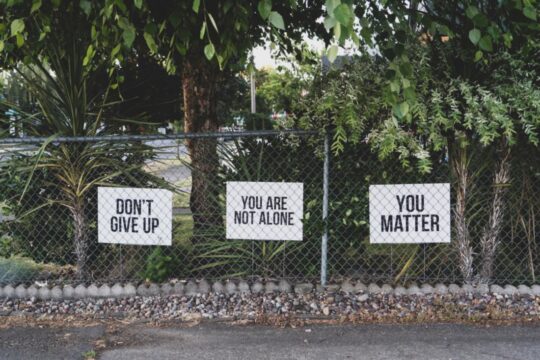
This is the delicate line between confidence and arrogance. Confidence says, “I matter.” Arrogance says, “I matter more than you.” And low self-worth whispers, “I don’t matter at all.”
This is the delicate line between confidence and arrogance. Confidence says, “I matter.” Arrogance says, “I matter more than you.” And low self-worth whispers, “I don’t matter at all.”
The truth is simpler and more beautiful: We all matter. Equally. Differently, but equally.
People with healthy self-worth understand they’re part of something larger. They know their life has purpose — not because they’re special in a way that diminishes others, but because every life has purpose. They contribute their unique gifts while honoring the gifts of others.
Those with inflated self-worth recognize their value but fail to see it in others. Those with depleted self-worth see value everywhere except in themselves. Both miss the fundamental truth: your worth isn’t comparative. It simply is.
The practice: Notice when you’re measuring your worth against external metrics — achievements, possessions, others’ opinions, social media validation. Then gently redirect: your worth exists independent of all of that. You matter because you’re here, breathing, learning, growing.
That’s enough. That’s always been enough.
2. Gratitude
Our brains are wired to notice problems.
This made evolutionary sense when survival depended on detecting threats. But in modern life, this bias keeps us cataloging everything that’s wrong, missing, or not-quite-right while overlooking what’s actually here, working, and worthy of appreciation.
Gratitude is the practice of retraining that attention.
It’s not about denying difficulties or pretending everything is perfect. It’s about expanding your awareness to include the good alongside the challenging — because both are always present.
What we focus on expands. Not magically, but practically. When we notice and appreciate what we have, we become more aware of abundance. When we fixate on lack, we become blind to the sufficiency that already exists.
I used to know someone who genuinely believed “no good deed goes unpunished.” And you know what? They were right — because they were looking for evidence of that belief, and they found it everywhere. Another person I knew always said, “Nothing good ever happens to me.” And for them, that became true too.
Not because the universe was punishing them, but because their attention was so focused on the negative that they couldn’t register the positive even when it appeared.
The deeper practice: Gratitude isn’t just “count your blessings.” It’s learning to appreciate what is, even when what is includes difficulty.
Can you be grateful for the lesson hidden in the mistake? The growth embedded in the challenge? The clarity that comes after confusion? The rest that follows exhaustion?
This isn’t toxic positivity. It’s recognizing that life gives us exactly what we need for our growth, even when what we need feels difficult in the moment.
Start here: Each day, notice three things you’re genuinely grateful for. Not performatively, not for a gratitude journal you’ll post online, but for yourself. Let the appreciation be real. Let it land in your body as relief, as warmth, as the simple acknowledgment: “This is here. This is good.”
3. Positive Life Framing
There are infinite ways to interpret any situation.
The same event can be seen as tragedy or opportunity, ending or beginning, failure or feedback. The circumstances don’t determine which interpretation you choose — your perspective does.
Three ways to view any information: positively, negatively, or neutrally.
Neutral is ideal — accepting what is without adding a layer of judgment or story. But neutral is difficult. It requires practice, presence, and a willingness to let reality be what it is without needing to control or fix it immediately.
As a stepping stone toward neutral, we can practice positive reframing: finding the benefit, the lesson, the opportunity hidden within difficulty.
This isn’t about pretending pain doesn’t exist or bypassing grief. It’s about remaining open to the possibility that even in hardship, there’s something of value — a lesson, a redirection, a necessary ending that makes space for a new beginning.
In physics, every neutron has a corresponding proton. In life, every challenge contains a corresponding gift.
Sometimes we see it immediately. More often, we see it in hindsight. The real mastery comes when we can hold space for both simultaneously — acknowledging the pain while trusting that something valuable is also present, even if we can’t see it yet.
The practice: When something difficult happens, try this: “This is hard. And there’s also something here for me to learn/receive/become. I don’t have to see it yet. I just have to stay open to its existence.”
This keeps you from collapsing into victimhood without denying the reality of your experience.
4. Internal Locus of Control
Where do you locate your power?
People with an internal locus of control believe they’re responsible for their outcomes based on their decisions, efforts, and responses. People with an external locus of control believe their outcomes are determined by luck, fate, other people, or circumstances beyond their influence.
Here’s what’s true: some things are genuinely beyond our control. We can’t control other people, random events, economic conditions, or countless other external factors.
But we can always control our response. Our interpretation. Our next action. Our attitude.
Internal locus of control produces a “can do” mindset. Even when circumstances are difficult, people with this orientation ask, “What can I do? What’s within my influence? Where can I take action?”
External locus of control produces a helpless mindset. When things go wrong, people with this orientation ask, “Why is this happening to me? Who’s to blame? What force outside myself is causing this?”
The difference isn’t just philosophical — it’s practical. One orientation empowers you to act. The other leaves you waiting for circumstances to change.
This doesn’t mean blaming yourself for everything. It means rejecting the role of victim and asking, “Given what’s happening, what’s my most empowered response?”
You can’t control whether you lose your job. But you can control whether you update your resume, reach out to your network, or learn a new skill.
You can’t control how someone treats you. But you can control whether you stay, set boundaries, or remove yourself from the situation.
You can’t control getting sick. But you can control how you care for yourself during illness and what meaning you make of the experience.
The shift: Notice when you’re waiting for external circumstances to change before you can feel better or take action. Then ask: “What’s one thing within my control right now?”
Start there. Your power lives there.
5. Lifelong Learning
The moment you believe you know everything is the moment you stop growing.
Lifelong learning isn’t about accumulating degrees or certifications (though those can be valuable). It’s about maintaining a posture of curiosity toward life itself.
Every person you meet knows something you don’t. Every situation contains a lesson. Every “mistake” offers wisdom — if you’re willing to extract it.
This orientation transforms your relationship with difficulty. Instead of viewing challenges as problems that shouldn’t exist, you begin to see them as curriculum. Life is always teaching. The question is whether you’re willing to be a student.
When things go wrong, people with a fixed mindset ask, “Why did this happen to me?” People with a learning mindset ask, “What is this here to teach me?”
The first question leads to resentment. The second leads to growth.
The dangerous territory: Believing you’ve arrived, that you’ve figured it all out, that you know better than the unfolding of your own life.
This closes you off from feedback, from evolution, from the constant refinement that makes us more fully human. It turns you rigid when life requires flexibility.
The practice: At the end of each day, ask yourself: “What did I learn today?”
It might be something about yourself, about another person, about how the world works, about what matters. It doesn’t have to be profound. It just has to be genuine.
When you train yourself to look for lessons, you find them everywhere. And in finding them, you transform even difficult experiences into opportunities for expansion.
6. Love
Most of us approach love backward.
We’re looking to receive it rather than give it. We’re seeking someone who will love us unconditionally while we love them conditionally — “I’ll love you as long as you meet my needs, don’t hurt me, and love me back in the ways I want.”
That’s transaction, not love.
Real love — the kind that generates lasting happiness — flows outward without demanding anything in return.
This doesn’t mean staying in harmful relationships or tolerating mistreatment. It means cultivating love as an internal state that you carry regardless of whether it’s reciprocated.
You’re fortunate when someone loves you unconditionally — whether it’s a parent, partner, friend, or even a beloved pet. That’s a gift to cherish.
But the deeper question is: How often do you extend unconditional love?
Do you love your fellow humans even when they’re difficult? Do you wish them well even when they’ve wronged you? Can you hold compassion for their struggles even when those struggles cause you pain?
This isn’t about being a doormat or allowing harm. It’s about recognizing that everyone is doing their best with the awareness and resources they have. It’s about choosing love as your default orientation toward the world.
The paradox: When you stop seeking love and start being love, you attract more love into your life. Not because of some mystical law, but because people are naturally drawn to those who emanate warmth, acceptance, and genuine care.
The practice: Each day, extend one act of kindness or compassion that expects nothing in return. Hold the door. Smile genuinely. Offer encouragement. Forgive silently. Wish someone well.
Do it not to get something back, but because that’s who you’re choosing to be.
This is the love that leads to happiness — not the love you receive, but the love you become.
7. Contribution
We’re not here just to consume, acquire, and experience pleasure.
We’re here to contribute something — to leave things a little better, a little lighter, a little more beautiful than we found them.
This is about knowing and following your life’s purpose. Not in some grand, save-the-world sense (though it can be that), but in the simple sense of doing work that feels meaningful, that touches lives, that aligns with your deepest values.
Happiness that comes from contribution is different from happiness that comes from consumption. One is sustainable, generative, and deepening. The other is temporary, requiring constant renewal.
Your purpose doesn’t have to be prestigious. It matters whether you’re cleaning public restrooms with care and dignity or researching cures for disease. What matters is that you’re doing the work you feel called to do, in service to something larger than yourself.
When you live in alignment with your purpose — when your daily actions reflect your deepest values — you experience a sense of fulfillment that nothing external can replicate.
Contribution is critical to happiness because it connects you to meaning. And humans need meaning the way we need food, water, and air. Without it, even a life of comfort and pleasure feels hollow.
The practice: Ask yourself: “What unique gifts do I have? What problems am I positioned to solve? Who am I here to serve?”
Your answers might surprise you. Your contribution might be smaller than you imagined or different than you expected. That’s okay. What matters is that it’s genuine, that it’s yours, that it’s something only you can offer in quite the way you offer it.
Then organize your life around offering that gift as fully as you can.
Living These Keys: A Lifetime Practice
These seven keys aren’t a checklist you complete and move on from.
They’re practices you return to again and again, each time with slightly more understanding, slightly more capacity, slightly more grace.
Some days you’ll remember them easily. Other days you’ll forget completely and have to start over. Both are part of the process.
The goal isn’t perfection. It’s direction.
Are you generally moving toward greater self-worth or away from it? Are you practicing gratitude more often than not? Are you learning to reframe difficulties? Are you taking responsibility for your responses? Are you staying curious? Are you becoming more loving? Are you contributing your gifts?
If you can answer yes more often than no, you’re on the path.
And that path — walked imperfectly, stumbled upon repeatedly, returned to after countless departures — is the path to lasting happiness.
Not happiness as constant pleasure or the absence of difficulty, but happiness as deep contentment, as alignment with your values, as the quiet satisfaction of becoming more fully yourself.
That’s the happiness worth pursuing. And these seven keys will help you find it.
Let your clothing reflect your inner values. 💚 At Zen Lines, we create mindful fashion designed to inspire harmony and ignite inner peace. Explore our vegan and inspirational collections at → ZenLines shop.